

If you’ve been applying for teaching roles and hearing nothing back, you’re in the right place.
The problem is actually how you’re showing it on paper. Most teacher CVs look exactly the same because everyone follows the same basic format: listing duties but leaving out classroom achievements.
This guide will show you how to write a teacher CV that will grab attention. We’ll cover the key elements hiring managers look for, common mistakes to avoid, and simple ways to make your teaching experience stand out.
First, let’s go through your CV and see what you might be missing.
Essential Elements of a Strong Teacher CV
A strong teacher CV needs five main sections: personal details, educational history, work experience, core skills, and references. Each part plays a specific role in showing hiring managers why you’re the right fit for their school. Let’s break down what belongs in each section and how you can present it properly.
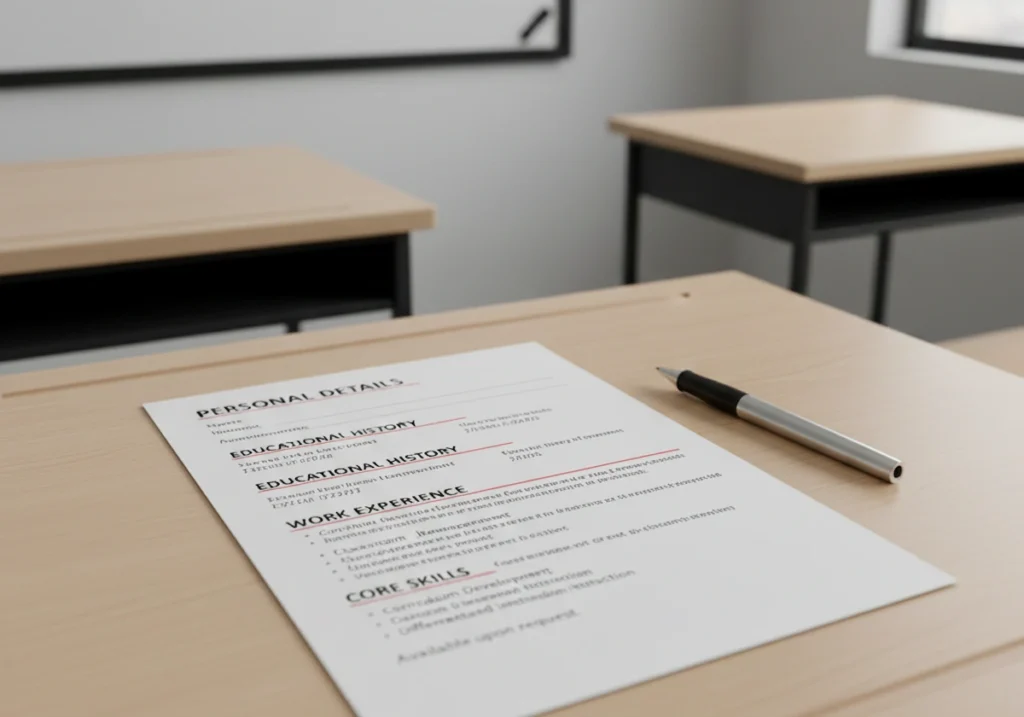
Personal Details
This is the first thing they’ll notice, so keep it simple and easy to read. Include your full name, phone number, email address, and teaching qualifications like QTS status. No need to include your full address (just your city will do fine). If you’re registered with the General Teaching Council or have special educational needs training, mention it here.
Educational History
Start with the basics you already know: list your most recent degree first, followed by earlier qualifications, including the university you attended and your graduation year. If your A levels relate to the teaching position you’re applying for, include those as well.
Don’t forget to add any ongoing professional development (like safeguarding courses or subject training), post-graduate studies and professional memberships. These details will show schools that you keep learning and care about teaching.
Work Experience
This section should present your teaching experience in reverse chronological order, starting with your current or most recent role.
For each teaching role, include the school name, which subjects you taught, and what your main responsibilities were.
Here are some questions to jog your memory:
- Did you plan lessons for Year 7?
- Did you adapt your teaching for diverse learning styles?
- Did you assess student progress and provide feedback?
- Did you use any classroom technology or resources to improve learning?
If you’ve held leadership positions like head of department or coordinated extracurricular activities, we recommend mentioning them separately. Your prospective schools will see you as a responsible educator eager to contribute and continue growing in your career.
Core Skills
Now we’ll get to the abilities that will have the biggest impact in the classroom, like classroom management, lesson planning, assessment methods, and communication with students and parents. We recommend giving specific examples of how you use these skills.
For example, you can explain how you build a positive learning environment through hands-on activities or interactive resources.
Pro tip: Focus on matching your skills to what the job description asks for to make this step easier.
Teacher CV Tips: Make Your CV Relevant to Each School
Schools skip generic CVs because they don’t explain why you’re the right fit. That’s why we suggest going a step further and customising your teacher CV for each role and school. Don’t worry, you only need to focus on what’s most important for the specific teaching role you’re applying for. We’ll share how you can do that.

Research the School
Before updating your CV, take time to understand the school’s values and priorities. The school’s website, Ofsted report, and their social media should tell you if they focus on inclusive classrooms, creative learning, or traditional teaching.
Once you know their values and teaching methodologies, you can adjust your teaching experience to reflect their priorities.
Education Agency Tips
Did you know that education agencies have insider knowledge about what schools want?
These agencies work directly with hiring managers and understand their priorities. So they know if a school values classroom management over extracurricular involvement, or if they need someone strong with special educational needs.
After placing teachers across London for nearly 20 years, we can say this insight gives candidates a significant advantage when competing against others.
Highlight Relevant Experience
Do you remember what we mentioned about core skills? You can be more specific and adjust which teaching experience you feature depending on the job.
Applying for a primary role? Talk about how you adapt lessons for diverse learning styles and build a positive learning environment with young people. Going for a secondary position? Focus on your subject knowledge and exam results.
If it’s a special educational needs role, you can lead with your SEN training and how you support students with different abilities. This will set you apart from candidates who will throw in their full work history and hope it catches their attention.
Use Keywords from Job Description
Finally, open the job description and circle the phrases they use repeatedly. If they mention “respectful learning environment” or “lesson planning,” you can use those exact words in your CV if they genuinely describe your experience (many schools scan CVs for these keywords before a human even reads them).
Pro tip: Add specific numbers to back up your claims. Instead of saying you’re good at engagement, write “increased student participation by 25% using interactive resources.” Using numbers this way will give hiring managers something concrete to remember about you.

Write a Teacher CV That Stands Out
So, does your current teacher’s CV tick these boxes, or does it need a bit of work?
We hope that following this guide will help you create a teacher CV that will get noticed by hiring managers instead of disappearing into the pile. Your teaching experience and classroom management skills deserve better than that.
Yes, tailoring your CV for each teaching job takes extra effort. But that’s exactly what separates teachers who get called for interviews from those who keep waiting by the phone.
Need help finding your next teaching role in London? Visit OTJR Online for support.